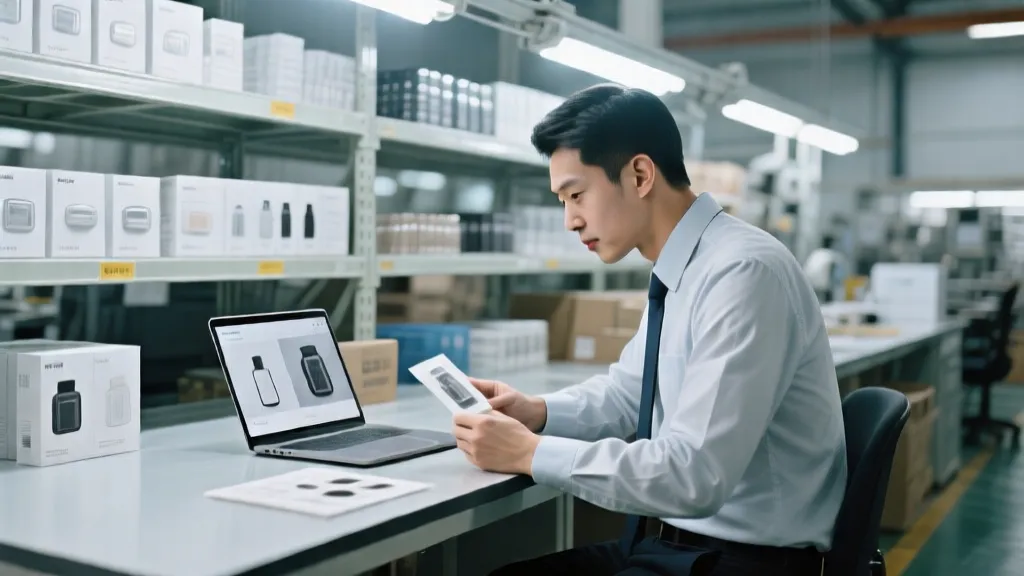
How to Source Products to Sell on Amazon in 2026–2027: A Seller's Walkthrough from Spec to FBA

This walkthrough was first published in September 2026. I have updated it in November 2026, because three things moved: the IEEPA tariffs were struck down in February and replaced, Amazon’s holiday peak fees opened on 15 October and run to 14 January 2027, and the EU’s small-parcel handling fee went live on 1 November. If your cost model was built on last quarter’s assumptions, the numbers below are the ones to re-check.
Every week, a new seller emails me with the same question: “Angel, how do I actually find a product to sell on Amazon — and how do I know it won’t lose money?”
I’ve spent more than ten years sourcing from China, the last several of them sitting across the table from factories on behalf of Amazon sellers. In that time I’ve watched the playbook change three times: when Amazon’s fee structure tightened, when the US ended the de minimis exemption for China-origin parcels in 2025, and again in 2026, when the Supreme Court struck down the IEEPA tariffs and the whole duty structure had to be rebuilt on new legal ground.
So this is the walkthrough I give my own clients — nine steps, in the order I actually do them, with the numbers that matter as of November 2026. If you’re sourcing your first product or re-sourcing a product whose margins quietly disappeared, this is for you.
What Changed Since September 2026
Four updates that alter the math, in order of how much money they move:
1. The duty stack is now statutory, not emergency. The IEEPA tariffs — the fentanyl and “reciprocal” layers — were struck down by the Supreme Court on 20 February 2026 and CBP stopped collecting them two days later. A flat 10% Section 122 surcharge replaced them until its 150-day limit expired in late July, and since 24 July 2026 a new Section 301 tranche of 10–12.5% applies, with China in the 12.5% tier. The original Section 301 lists (25% on Lists 1–3, 7.5% on List 4A) were never touched. For most consumer goods the total is not lower than 2025 — it is differently composed, and it is now product-specific.
2. Semiconductors moved into Section 232. That matters for anything with a chipboard inside it: the classification question is no longer only “which Section 301 list”, but “does this product’s component profile pull it into a Section 232 category”. Two visually identical gadgets can carry materially different duty.
3. Q4 2026 is already priced. Amazon’s holiday peak fulfillment fees started on 15 October 2026 and run through 14 January 2027, averaging about $0.32 per unit above non-peak rates across FBA, Remote Fulfillment with FBA, Multi-Channel Fulfillment and Buy with Prime — with a 3.5% fuel and logistics-related surcharge on top. Anything that is not already received is paying that. The tactical consequence: ship the Q1 2027 replenishment to arrive in mid-January, not mid-December.
4. The EU closed its own loophole. From 1 November 2026 the EU applies a handling fee on low-value parcels and requires product identifiers on consignments, completing the reform that removed the €150 duty-free threshold on 1 July 2026. If you sell into the EU from the same Chinese supplier, that is a per-item cost you now have to model separately from US duty.
Step 1: Start With Demand, Not With a Product
The most expensive mistake in Amazon sourcing is falling in love with a product before you’ve checked whether anyone is searching for it.
Before you talk to a single supplier, run this filter:
- Search volume and trend: Is the main keyword searched consistently on Amazon, or is it a spike? A product with a two-week TikTok peak and no baseline demand will strand your inventory in an FBA warehouse for six months.
- Review moat: Look at the top 10 results. If every listing has 3,000+ reviews, a five-year-old brand, and a sub-$20 price, a new seller has almost no room. I look for niches where the top listings have 200–800 reviews — enough demand to prove the market, thin enough that a better listing can break in.
- Size and weight: For FBA, a 30 × 20 × 10 cm, 400 g product is a completely different business than a 60 cm ceramic item. Oversize items can double your fulfillment fee and quadruple your freight per unit.
- Seasonality: A Christmas-only product is not a business, it’s a lottery ticket. I prefer products with a 12-month baseline plus a seasonal lift.
- Tariff profile: Before anything else, find the HS code and what sits on top of it. A product with a 3% base rate and a product with a 25% Section 301 line are different businesses even at the same factory price.
Step 2: Work Backward From Unit Economics (This Is Where 2026 Breaks People)
Amazon sourcing is a margin exercise disguised as a product hunt. Build the math before you request a quote, so a quote can only confirm or kill the idea — never surprise you.
Landed cost per unit = (unit price + packaging + labeling + inland freight to port + export documentation) + international freight + insurance + duty + customs brokerage + last-mile to FBA
Net margin = sale price − landed cost − referral fee (≈15%) − FBA fulfillment fee − inbound placement fee − storage − advertising − returns allowance (3–5%)
Here is a real sheet from a first-order project this autumn — 1,000 units, US market, a $6.40 FOB consumer product:
| Line | Per unit |
|---|---|
| FOB Shenzhen | $6.40 |
| Ocean freight + insurance to FBA | $0.90 |
| Section 301 (25% of transaction value) | $1.60 |
| New Section 301 tranche (12.5%) | $0.80 |
| MPF + HMF (~0.47%) | $0.03 |
| Brokerage, drayage, last mile to FBA | $0.35 |
| Landed cost | $10.08 |
Duty alone is 38% of the factory price, and it is levied on transaction value — so $0.10 saved at the factory is worth about $0.14 landed. On a $29.99 sale, Amazon then takes referral fee $4.50, FBA fulfillment $5.20, inbound placement $0.35, storage $0.15, advertising $3.00 and a 4% returns allowance ($1.20) — $14.40 in total. Contribution: $5.51, or 18.4%.
That is the honest picture for a mid-weight consumer product in late 2026. Three things to take from it:
- Duty is no longer a rounding error. I build a 15–25% landed-cost buffer into any 2026–2027 quote sheet until the trade picture stabilizes, and I re-check the classification before every reorder, because 232 and 301 lists still move. The full breakdown of what is on top of what is in our China import duty guide.
- Amazon’s total take is 45–50% of the sale price for many categories before you pay for the product. If your target is a 30% net margin and Amazon takes half, your sourcing discipline has to be excellent — there’s no fat left to absorb a bad price.
- Freight is volatile, not linear. Ocean rates can move 30% in a quarter. Quote in ranges and keep a second freight option.
A practical target: aim for a unit price that is no more than 20% of your planned sale price once duty runs at 30% or more, and a contribution margin of 30%+ before advertising. If the numbers only work when you assume a perfect launch, they don’t work.
Step 3: Choose the Right Sourcing Channel
There is no universal best channel — there’s a best channel for your order size, category, and risk tolerance. Here’s how I’d rank them honestly:
| Channel | Best for | The catch |
|---|---|---|
| Alibaba | First orders, verifiable suppliers, trade assurance | Prices include trading-company markup; you must still verify |
| 1688.com | Low-cost domestic Chinese supply, price benchmarking | Chinese-only, no export service, hard to pay from overseas |
| Global Sources / Made-in-China | Electronics, industrial, OEM-leaning factories | Fewer listings, slower response |
| Canton Fair / Yiwu | Meeting suppliers in person, seeing real samples | Travel cost, no guarantee of post-fair follow-through |
| Sourcing agent | Anything above ~$5–10k, custom or private-label goods | A fee (typically 5–10%) — worth it only with a genuine operator |
My honest advice: use Alibaba and 1688 to research, then decide who executes. A sourcing agent earns their fee not by finding a factory you couldn’t find, but by vetting it, negotiating it, inspecting it, and handling the parts of the process (HS codes, DDP, compliance documents) where a single mistake costs more than the entire commission. If you’re weighing the two paths, read Amazon FBA sourcing agent: the complete guide — it breaks down exactly what an agent does versus what you still have to do yourself.
Step 4: Vet Suppliers Before You Send a Yuan
Roughly one in five suppliers I audit in the early stage of a project does not match the profile they advertise — a trading company posing as a factory, a factory without the certification they claim, or a “manufacturer” whose address is a residential building.
Do these five checks before any deposit:
- Business license verification — company name, registered capital, establishment year, and scope. Compare the license name with the bank account name. If they differ, ask why in writing.
- Factory photos and video call — ask for a live walkthrough, not a photo album. Show a specific machine working. A real factory will oblige within a day.
- Certification documents — request the certificate and the test report, plus the lab’s verification. Certificates are easy to photoshop, and a report for a different model number is the single most common fake in 2026.
- Reference customers — ask for two overseas buyers in similar categories. Fibbing is common; silence is an answer.
- Sample from two factories minimum — never from one, even if the first looks perfect.
If the order is above roughly $20,000, or if the product is custom-tooled, an on-site audit before production is cheap insurance.
Step 5: Get Samples and Lock the Spec
The sample is not a formality — it’s the contract. Everything that goes wrong in production traces back to a spec that was never written down.
When you order samples, insist on:
- A written spec sheet with dimensions, materials, weight, colors (Pantone codes, not “light blue”), packaging, and tolerances.
- Two production-ready samples, not one “golden sample” the factory will keep for itself and never replicate.
- A retained keep-sample signed and dated by both sides — this is your legal reference if bulk shipment differs.
Our guide to getting samples from China suppliers walks through pricing, timelines, and how to test a sample like a customer rather than like a buyer. Sample stage typically costs $150–600 including courier, and it’s the highest-ROI money in the entire process.
Step 6: Negotiate Price, MOQ, and Payment Terms Together
New sellers negotiate price. Experienced sellers negotiate the package.
- Price: Ask for a tiered price table (500 / 1,000 / 3,000 / 5,000 units) so you can see the cost curve instead of guessing.
- MOQ: Most factories quote a default MOQ, not a real one. MOQ is negotiable against longer terms, a deposit, or accepting the factory’s existing material stock — and asking for the real number is the single fastest way to find out whether you’re dealing with a factory or a reseller.
- Payment terms: 30/70 is standard. If a supplier demands 100% up front for a first order with no trade record, treat it as a red flag. Never wire to a personal account when the contract names a company.
- Duty allocation: In a tariff-heavy year, DDP quotes shift the duty risk to the seller — until they don’t honour it. Get the duty treatment in writing, with the HS code named.
- Penalty clauses: Put the delivery date and the defect rate in the contract with a clear remedy. A supplier who refuses to sign either doesn’t expect to meet them.
Step 7: Handle Compliance Before Production, Not After
This is the step that kills launches. Compliance failures don’t just cost money — they get listings suppressed or your account flagged, often after you’ve paid for the entire run.
- Children’s products need a CPC backed by lab testing from an approved lab. No certificate, no listing.
- Electronics need FCC for the US, plus CE/RoHS if you sell into the EU or UK — and for radio devices the FCC ID must match the exact module, not the product family.
- Beauty, supplements, and food-contact items may require FDA registration and facility documentation.
- Batteries and lithium products carry their own transport and UN38.3 requirements.
Budget $1,000–8,000 for testing depending on category, and start the clock during sampling, not after the PO is issued. Our product compliance and certification guide lists the marks each category needs.
Step 8: Inspect Before It Ships
You cannot fix quality after the container lands. Pre-shipment inspection is your last reversible moment.
I inspect in three stages: pre-production (materials and components correct), during production (first 20–30% off the line), and pre-shipment (AQL sampling on finished, packed cartons). For a first order, I treat the pre-shipment inspection as non-negotiable even after a perfect sample — the classic bait-and-switch lives exactly there.
Typical cost: $250–400 per man-day in Guangdong, Zhejiang, or Fujian. Compare that to the cost of 2,000 units that don’t match your listing photos.
Step 9: Ship FBA-Ready and Plan the Reorder
For FBA, get the product to arrive in the shape Amazon wants the first time:
- Labels and FNSKU: Factory-applied FNSKU labels and correct poly-bag suffocation warnings save you a prep-service bill and a week of delay.
- Carton requirements: Box weight and dimension limits, correct carton labeling, and a packing list per carton.
- Incoterm: For FBA, DDP is usually right — but in 2026 read the DDP quote for who absorbs a tariff change between quote and clearance.
- Reorder lead time: Total lead time = production (25–45 days) + inspection + freight (25–40 days by sea) + inbound check-in. Add Chinese New Year (factories close 2–4 weeks) and Golden Week, then order that far ahead of your stock-out date.
Here is the calendar I’m working to for the current cycle, so you can see how tight it already is:
| Window | What happens | What to do |
|---|---|---|
| 15 Oct 2026 – 14 Jan 2027 | Amazon holiday peak fees (+~$0.32/unit average, plus 3.5% fuel surcharge) | Get inbounds received before the fee window; move hot-SKU replenishment to air |
| Nov–Dec 2026 | Peak selling season; port, rail and drayage congestion | Hold 60–90 days of cover on hero SKUs; never run a top seller to zero |
| ~20 Dec 2026 | Practical cut-off to secure a production slot before Chinese New Year | Pay the deposit before this date or accept a March delivery |
| 14 Jan 2027 | Peak fees end | Time large inbounds for mid-January, not mid-December |
| 25–31 Jan 2027 | Last realistic shipping window before the holiday slowdown | Lock freight bookings weeks ahead; space gets expensive |
| 5–12 Feb 2027 | Chinese New Year (New Year’s Eve 5 Feb, holiday 6–12 Feb) | Expect 2–4 weeks of closure; lines thin from late January |
| 1 Jul 2027 | Section 321 de minimis repeal for all commercial shipments takes effect | Model a full-duty scenario now for anything you plan to sell into late 2027 |
The Six Mistakes That Sink Amazon Sourcing Projects
- Quoting one factory and stopping. Get at least three quotes on the same spec sheet; spread is routinely 20–40%.
- Ignoring the tariff math until customs calls. Model landed cost with duty from day one, and re-run it at every reorder.
- Cashing in on a duty refund and calling it margin. The February 2026 ruling made billions of dollars of IEEPA duty refundable; a refund is a one-off balance-sheet event, not a business model.
- Chasing the lowest price past the quality floor. The cheapest quote in a category is usually cheapest for a reason you’ll discover at inspection.
- Skipping the keep-sample. Without it, “this isn’t what we agreed” has no proof behind it.
- Under-ordering the first run to “test” with no reorder plan. A stock-out in your first 60 days teaches Amazon’s algorithm that your listing doesn’t deserve impressions.
Frequently Asked Questions
Can I source products to sell on Amazon without a sourcing agent? Yes. For simple, non-custom goods under roughly $5,000, a careful seller can handle Alibaba sourcing alone. The break-even shifts once your order is custom, private-label, compliance-heavy, or above $10,000 — that’s where agent fees start paying for themselves.
What margin should I target? Aim for a 30%+ contribution margin before advertising and a net margin of 15–20% after Amazon fees, ads, and returns. Below that, you have no room for a bad quarter.
How much money do I need to start? For a first FBA order that can actually rank, most of my clients start at $3,000–8,000 including product, freight, duty, compliance, and launch advertising. Under $2,000, you’re usually better off with a smaller, lighter, higher-margin item.
How long does the first order take? Sampling 2–3 weeks, production 25–45 days, inspection and freight 25–40 days by sea. Plan 10–14 weeks from supplier selection to Amazon check-in, and longer around Chinese New Year.
Is 2027 going to be easier on duty? Nobody credible will tell you that. The Section 301 second four-year review is still open, Section 232 keeps expanding, and the Section 321 repeal lands on 1 July 2027. Plan on duty staying a line item you manage, not a problem that goes away.
Where I’d Start If This Were My First Order
Sourcing for Amazon is a sequence, not a secret: validate demand, build the landed-cost math, vet suppliers properly, lock the spec with samples, ship FBA-ready. Do those five things and you’re already ahead of most first-time sellers.
If you’d rather not run that sequence alone — or you’ve hit a step where a mistake is expensive — that’s exactly the work we do. Our product sourcing in China service covers supplier identification, vetting, sampling, negotiation, inspection, and DDP delivery to your FBA warehouse. Tell us what you’re selling and we’ll tell you honestly whether the numbers work — including when they don’t.
Get a Free Sourcing Quote
Tell us about the product you want to source and our team will get back to you within 24 hours.